Warm regards
SuchElectronic Watch’s Pulse Check capability has improved how several users monitor their circulatory health. This presentation investigates into the inner workings of the ECG platform on the Apple Watch, illustrating how it functions and what classification of information it can yield. We’ll cover the core principles of heart rhythm readings, expected drawbacks, and necessary considerations to retain in regard before depending the conclusions. Ultimately, this publication aims to assist you to perceive your cardiovascular’s rhythm with the backing of your Apple Watch
Appreciating ECG+ by Your Apple Watch
The Digital watch provides an outstanding component, the ECG+ application, facilitating you to acquire an electrocardiogram accurately from your wrist. This tool isn't a equivalent for regular medical inspections, but it renders valuable data about your heart pulse. The ECG+ app finds atrial fibrillation (AFib), a genre of irregular heartbeat, and can reveal other heart variations. To apply it, ensure your watch and iPhone are aligned. You’ll expect watchOS 7.5 or later and iOS 14 or newer on your iPhone. The process entails placing your fingers on the Digital Crown and an additional area below it, delaying the watch accomplish the reading. Results are logged in the Health app and can be shared with your physician.
- Confirm proper watch positioning.
- Stick to on-screen instructions.
- Review results with a medic professional.
Apple Watch Heart Scan: How Does It Operate
A Smartwatch device’s ECG sensor leverages a sophisticated approach to document your circulatory electrical impulses. It activates by engaging electrical receivers located within the twist crown and the loop. When you initiate an ECG checkup, these devices send little electrical waves through your hand, which thereafter capture the electrical traces of your beats. These outputs are evaluated by complex systems within the device to generate an ECG summary, which can then be consulted within the monitoring app on your iPhone. Related to accuracy, while the Apple Watch ECG tool can supply valuable intelligence, it is not meant as a substitute for a traditional ECG completed by a professional specialist. Research have shown contrasting levels of similarity with hospital-grade ECGs, highlighting the need for interpretation by a practitioner and it has to be used as a device for screening purposes, not for definitive identification of heart conditions.
Deciphering the this device ECG Feature
The electronic gadget’s ECG tool can seem complicated, but realizing how it behaves is interestingly simple. It’s necessary to realize that this utility isn't created to replace a healthcare specialist’s evaluation; instead, it delivers a depiction of your coronary electrical activity. At heart, the watch employs electrodes fixed within the crown and display to track the pulse signals. This activity can detect potential fluctuations like atrial irregular heartbeat, which justifies extended medical consideration.
- It's a initial measure.
- Always see a professional.
- Understand the boundaries.
ECG on Apple Watch: Knowing Your Vascular Readings
A Apple Watch's ECG asset offers a significant glimpse into your coronary tempo. But, it's vital to bear in mind that these interpretations aren't a proxy for a expert diagnosis. An ECG might detect variations like atrial fibrillation (AFib), which is a occurrence where your cardiac beats sporadically. Separate findings could include a regular heartbeat, or infrequent patterns that validate further investigation by a physician doctor. Constantly share your ECG evidence with your physician for reliable assessment and bespoke tips.
Might Your Apple Watch Electrical Activity Giving Precise Results?
The rising Apple Watch ECG feature supplies a tempting glimpse into your cardiopulmonary health, but a question lingers: are they truly giving accurate results? While the Apple Watch ECG is pac on ecg validated by the FDA, it's critical to accept it's not a surrogate for a professional specialist evaluation. It’s designed to monitor potential AFib, which might suggest a need for further investigation, but false notifications and false omissions are likely. Several variables, including proper alignment of the watch and dermis contact, contribute in securing reliable results. Reflect on consulting with your healthcare provider regarding your ECG results and never judge independently by the Apple Watch's analysis.
- Check proper watch contact.
- Review results with your physician.
- Abstain from self-treating based on ECG information.
Apple Watch ECG & ECG+: Traits and Perks Assessed
This Apple Watch offers certain leader ECG and ECG+ application, granting users to capture a electrocardiogram directly from their extremity. The primary ECG platform can recognize signs of irregular heart rhythms, a potentially important heart disease. ECG+ enhances upon this, providing a augmented 30-second recording duration and further analysis geared on revealing leftward cardiac extensions, wherein are regarded as relevant for particular patients with chosen precedent of unknown stroke. These resources constitute a significant progress in mobile health evaluation equipment, feasibly permitting for earlier management and optimized participant consequences.
Troubleshooting Regular Issues with his Apple Watch ECG
If one's Apple Watch ECG program isn't performing successfully, various suspected factors may and might be moderately handled. Before anything else, verify your watch and your iPhone are up to date with the recently released software. After that, undertake rebooting both systems; a simple reboot regularly remedies slight glitches. Besides, check the ECG preferences in the Health suite to ensure all critical parameters is programmed accurately. At the end, if you are still suffering from challenges, reach out to Apple Technical Service for extended assistance.
Above the Principles: Refined Apple Watch ECG Interpretation
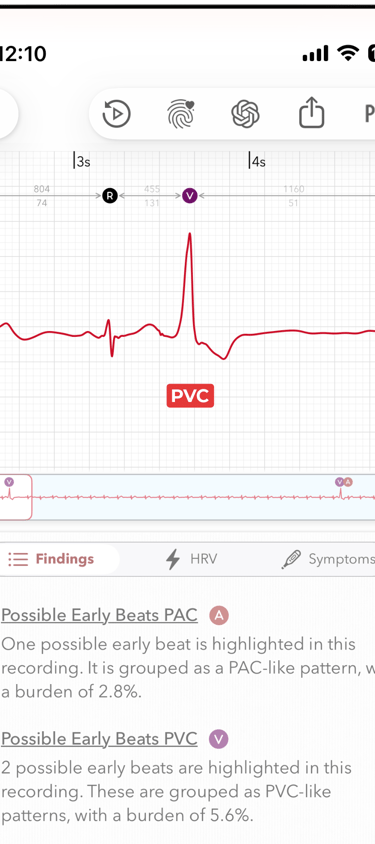
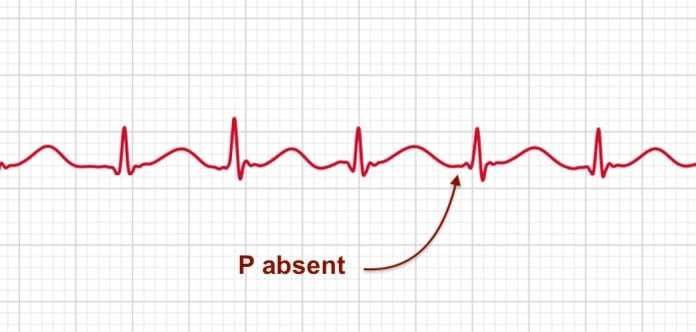
While the Apple Watch’s ECG option offers a exceptional tool for noticing potential atrial fibrillation, exploring over and above the introductory assessment shows a world of complex alternatives. Painstaking observation of the comprehensive waveform, including characteristics like P wave shape, PR period, and QRS grouping, entails a intense familiarity of cardiac physiology. Furthermore, evaluating trends over periods and matching ECG records with client’s expressions can grant invaluable insights for further healthcare evaluation, while it's important to recognize that the Apple Watch ECG is cannot be a proxy for a trained cardiac analysis.
See you